Legends & Lore
Long before modern navigation, sailors carried more than charts and compasses across the world's oceans. They carried stories. Tales of phantom ships, creatures beneath the waves, and mysteries that defied explanation. Some were born of fear, others of observation, and a few remain unanswered to this day.
This series explores the stories that traveled with those who went to sea, preserving the history, imagination, and enduring mysteries of the maritime world.
192-blank, lined pages, hardcover notebooks
6 × 9-inch professional size
Matte finish with wrap-around cover design
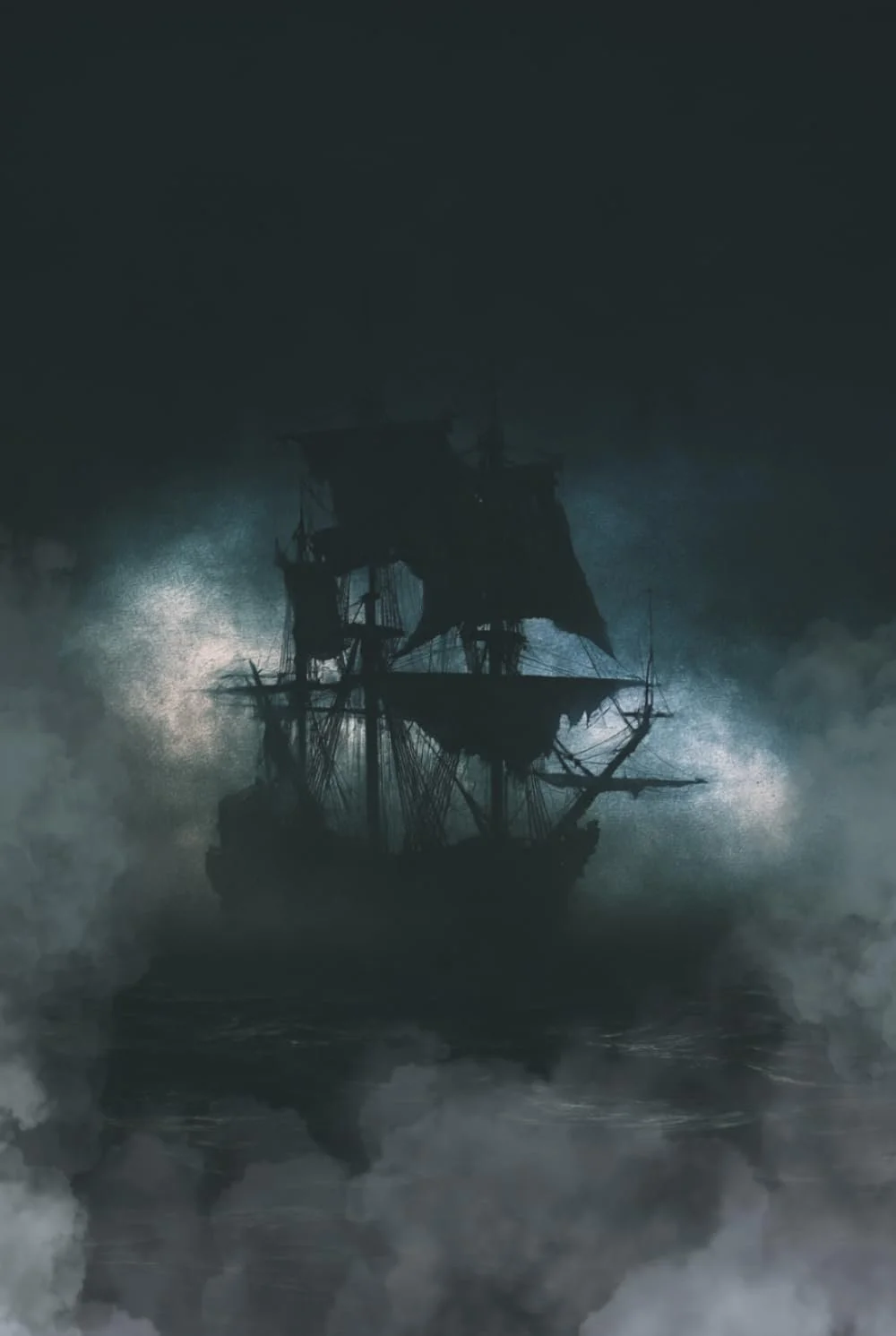
For centuries, sailors have told of a phantom vessel condemned to wander the oceans, never permitted to make port. Known as the Flying Dutchman, the legendary ship is most often associated with the treacherous waters surrounding the Cape of Good Hope. Accounts vary, but many tell of a Dutch captain who defied a violent storm, swearing he would round the cape even if it took until Judgment Day. His defiance became his curse; his ship and crew were sentenced to sail for eternity.
The Flying Dutchman became one of maritime folklore's most enduring legends, with sightings traditionally regarded as omens of misfortune. Whether born from superstition, unusual atmospheric conditions, or the imagination of sailors facing the unknown, the story reflects the fear and uncertainty of life at sea. It endures as a reminder that even those who master the art of navigation cannot command the ocean itself. It may even mean imminent danger to those who do not heed her warning.
The Flying Dutchman
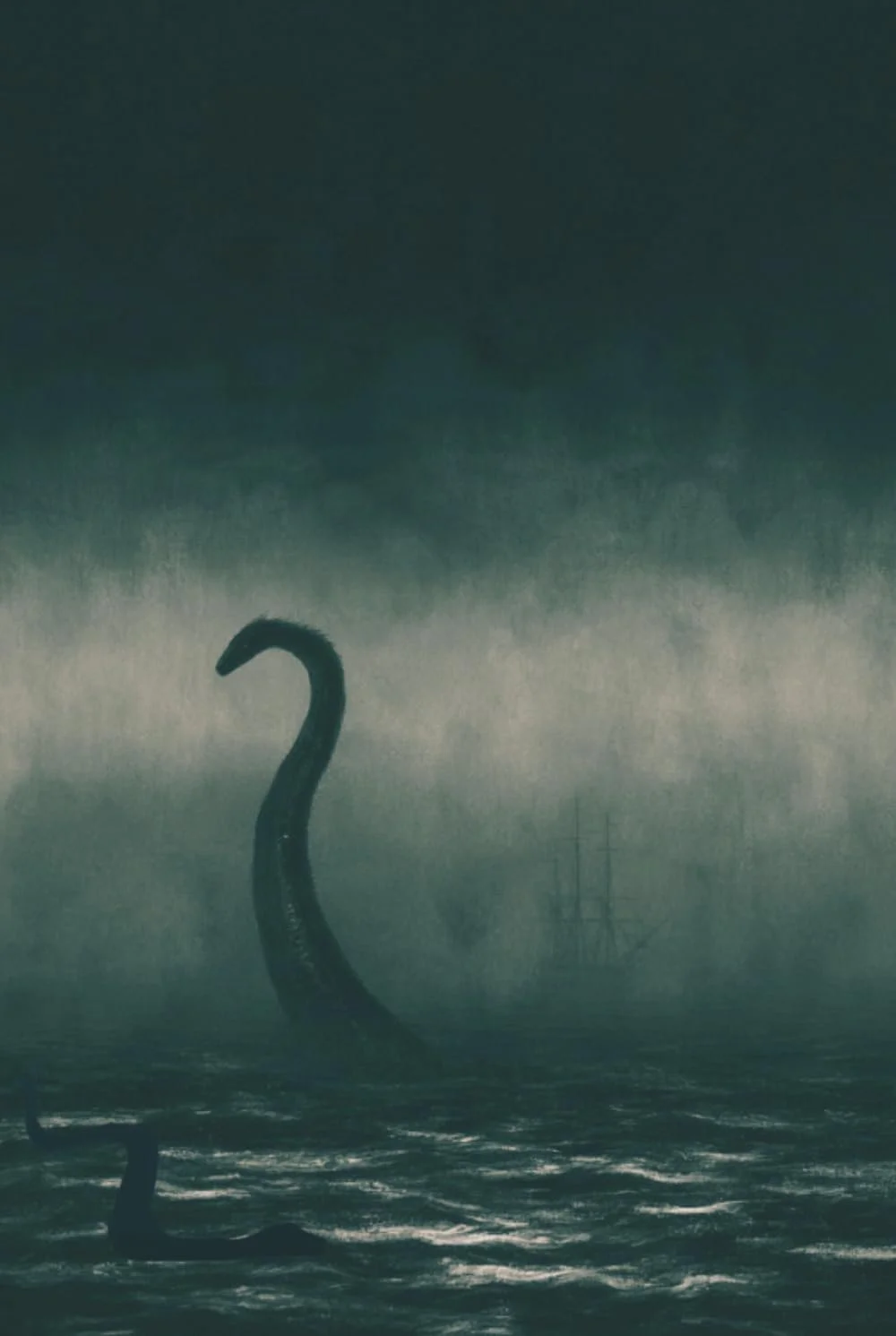
The Sea Serpent
For generations, sailors crossing the world's oceans reported sightings of enormous serpentine creatures moving through the waves. Descriptions varied, but many accounts shared similarities: elongated bodies, powerful movements, and dark forms rising above the surface before disappearing into the depths of the sea. Among the most famous reports was an 1848 sighting by officers and crew aboard a British vessel, the Daedalus, whose account of a large, unidentified sea creature captured public attention and fueled debate about what creatures might inhabit the open ocean.
Despite centuries of reports, no evidence has established the existence of the great sea serpents described in maritime folklore. Some sightings may have involved whales, large fish, floating debris, or unfamiliar marine animals observed under dark or cloudy conditions. Yet the stories endured, passed between generations of sailors who understood that the ocean could reveal extraordinary things while concealing far more. The sea serpent remains a symbol of our enduring curiosity about what lies beyond the known horizon alongside our fears of the unknown.
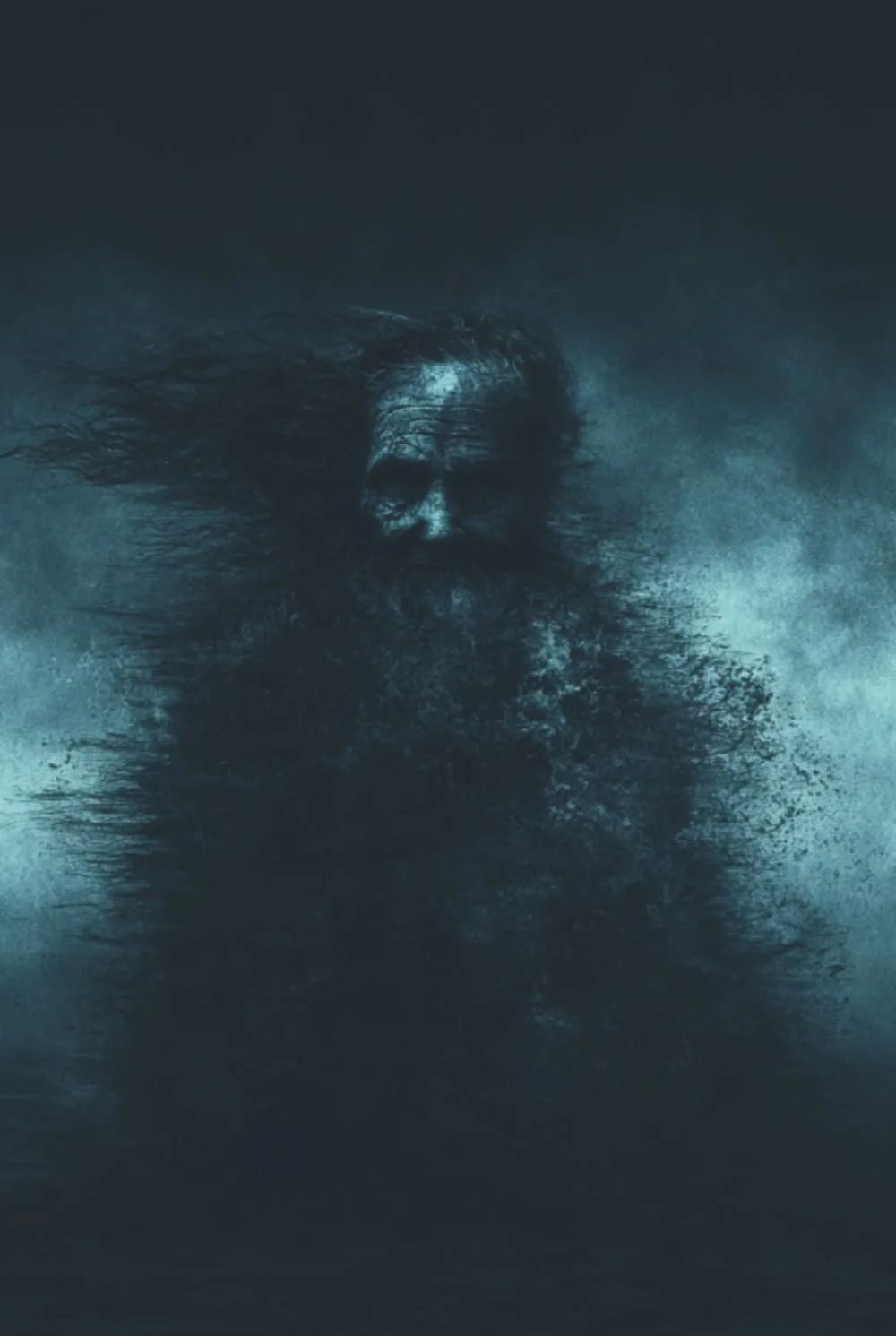
The Hag of Corryvreckan
In the turbulent waters between the Scottish islands of Jura and Scarba lies the Gulf of Corryvreckan, home to one of the world's most formidable whirlpools. According to Scottish folklore, these waters are associated with The Cailleach, an ancient hag who commands the forces of winter and storm. One tradition tells of her churning the sea by vigorously washing her great plaid in the waters. Once clean and white, she drapes it across the mountain tops bringing the winter snow. The roaring currents and crashing waves are an expression of her immense power, transforming a dangerous natural phenomenon into legend passed down through generations.
Beneath the legend lies a very real seafaring hazard. Powerful tidal currents rushing over an uneven seabed create the turbulent waters for which Corryvreckan is renowned. For generations, sailors approached these waters with caution, knowing that experience and skill cannot overcome all forces of nature. The Hag of Corryvreckan endures as a reminder that the sea demands respect, not conquest, and that wisdom sometimes lies in recognizing one’s own limits.